How Short-Term Retail Space Supports Omnichannel Strategy
4 mins
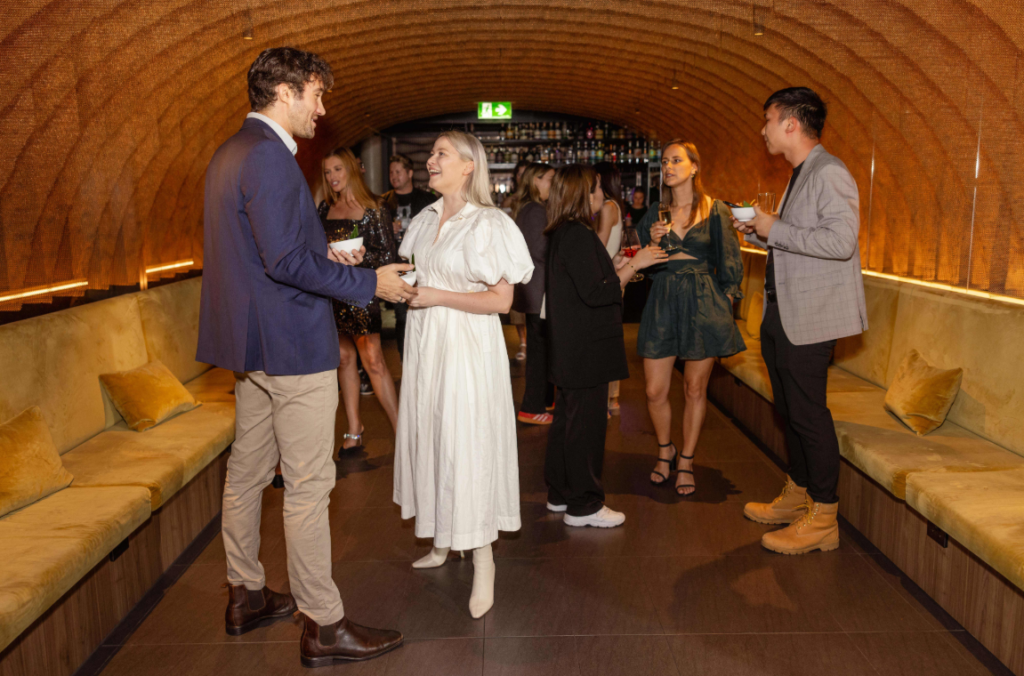
Retail is no longer divided between online and offline. The strongest brands now operate across both, using physical environments and digital channels to reinforce each other.
But omnichannel success does not require a permanent lease.
Short-term retail space has become one of the most practical ways to test, refine, and scale an omnichannel retail space strategy. without committing to long-term overhead.
Here is how.
Omnichannel Is About Integration, Not Presence
Omnichannel retail is not simply about “being everywhere.”
It is about creating a connected customer journey.
According to the Deloitte Omnichannel Retail Report, customers who engage across multiple channels tend to spend more and show stronger brand loyalty than single-channel shoppers. Meanwhile, the PwC Global Consumer Insights Survey consistently highlights that consumers expect seamless movement between digital and physical environments.
The challenge is execution.
Short-term retail space allows brands to test physical integration before scaling permanently.
1. Click-and-Collect Testing Without Long-Term Commitment
Click-and-collect is often cited as a cornerstone of omnichannel retail space strategy.
However, not every location justifies a full-time store.
Short-term retail spaces allow brands to:
- Pilot click-and-collect in high-density areas
- Test peak pickup hours
- Evaluate staffing requirements
- Measure impact on repeat purchase rates
Instead of assuming demand, brands can observe it in real time.
This reduces risk while providing data-backed insight into whether a location supports ongoing physical presence.
2. Returns Reduction Through Physical Touchpoints
Returns remain one of the most expensive friction points in ecommerce.
Short-term retail space can support omnichannel performance by:
- Allowing customers to try products before purchase
- Providing sizing or fit validation
- Offering in-person exchanges instead of refunds
When customers can physically interact with products, hesitation decreases and post-purchase regret reduces.
This directly improves margin performance — without requiring permanent occupancy.
3. Online-to-Offline Conversion Acceleration
Digital marketing drives awareness.
Physical retail builds conviction.
An omnichannel retail space strategy often aims to convert high-intent online customers into confident buyers through physical validation.
Short-term retail space supports this by:
- Hosting product demonstrations
- Running limited-time activations tied to online campaigns
- Offering exclusive in-store launches
The urgency of a temporary activation often increases foot traffic from existing digital audiences.
Rather than replacing ecommerce, physical retail reinforces it.
4. Brand Trust Amplification
Trust compounds across channels.
Research from PwC shows consumers place greater confidence in brands that offer physical accessibility alongside digital convenience.
A short-term retail presence signals:
- Legitimacy
- Investment in customer experience
- Accountability
For ecommerce brands in particular, a physical activation often increases perceived stability — even if the space is temporary.
Customers are more likely to repurchase online after experiencing the brand in person.
5. Data-Driven Expansion Decisions
Short-term retail space acts as a controlled experiment within a broader omnichannel retail space strategy.
Brands can measure:
- Foot traffic conversion rates
- In-store vs online basket value
- Cross-channel purchasing behaviour
- Customer acquisition cost differences
If performance justifies it, brands scale.
If not, they pivot without long-term lease exposure.
Flexibility becomes strategic leverage.
Omnichannel Strategy Without Long-Term Rigidity
Permanent stores require long forecasting cycles.
Short-term retail space allows iteration.
During economic uncertainty or shifting consumer behaviour, brands benefit from being able to:
- Enter new neighbourhoods quickly
- Align physical presence with seasonal demand
- Test local relevance before expansion
This approach aligns with the increasing demand for adaptable retail models seen across Australian market reports.
Omnichannel retail space is no longer about static footprints.
It is about responsive integration.
The Strategic Advantage of Short-Term Retail
Physical retail is not disappearing.
It is evolving.
Short-term retail space allows brands to integrate physical presence into omnichannel strategy with:
- Lower lease exposure
- Greater flexibility
- Faster learning cycles
- Stronger trust signals
At Spacenow, we work with brands that use short-term retail space not as a temporary solution, but as a strategic tool within their omnichannel retail space approach.
Because in modern retail, agility is not optional. It is infrastructure.