Booking a photo studio: what to check before you pay
7 mins
Use this hire photo studio checklist before booking a space for your next shoot. Whether you're a photographer, production coordinator or brand team, checking natural light, ceiling height, power availability and equipment access can help you avoid practical problems on shoot day. Confirm the details with the studio before paying for your booking.
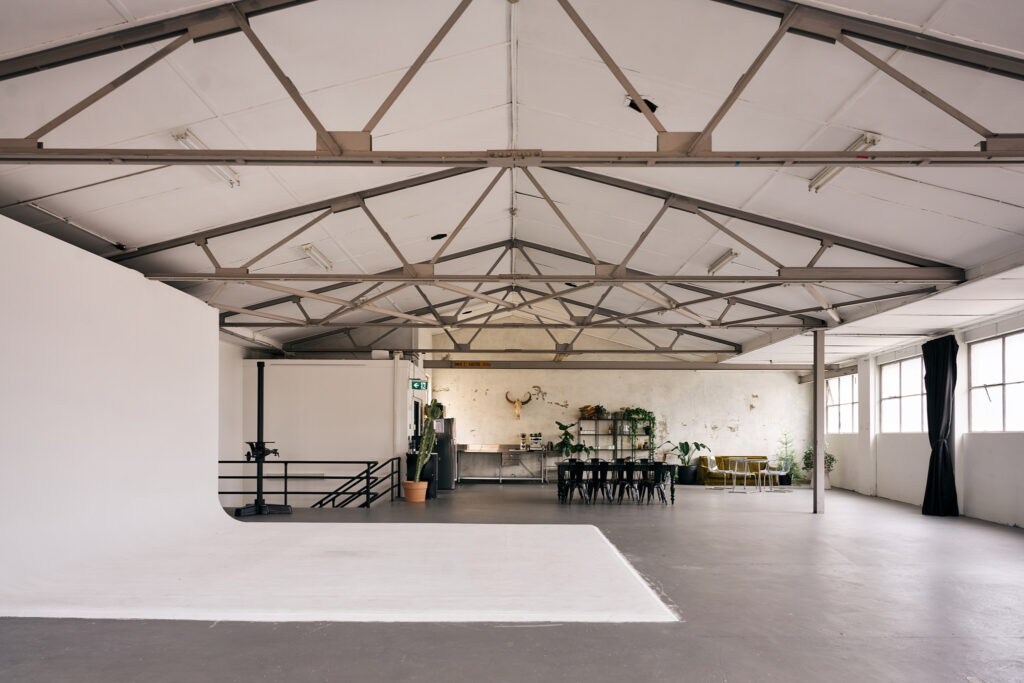
Natural light, and the question to ask about it
All-day natural light is the most common line in a studio listing and the most common source of disappointment. The first thing to ask is which way the windows face.
For most of Australia the sun tracks across the northern sky, so:
- South-facing windows give soft, even, indirect light for most of the day. This is usually what photographers mean when they ask for natural light.
- North-facing windows bring direct sun through the middle of the day, and in winter it reaches deep into the room. That suits some briefs, but for others it means hard shadows and hot spots.
- East gives you direct morning sun that flattens out by lunch. West is the reverse, with soft light in the morning and strong direct sun through the afternoon.
Then ask for photos of the room taken at the time of day you plan to shoot, what blinds or blackout the windows have, and whether a neighbouring building shades them. A skylight gives good light on a clear day, but passing cloud can change the exposure halfway through a product sequence.
A good studio write-up states orientation plainly. Ours on Frank The Studio in Botany names the window directions and the cyc size, which is the level of detail to ask every studio for. You can compare rooms by light, size and features across our creative spaces and studios.
Ceiling height, cyc walls and infinity coves
Ceiling height decides what you can light from above and whether stands and booms stay out of frame. As a rough guide:
- Tabletop and product: almost any room works, as long as you can get a light overhead.
- Portraits and half-length fashion: around 3 metres is workable.
- Full-length fashion and groups: look for 4 metres or more, so a light on a boom and a backdrop on stands clear the top of the frame.
Measure depth as well. A full-length shot on a longer lens needs distance between camera, subject and background, and a shallow room forces you onto a wide lens that distorts. Ask for the height at the lowest point, under beams and ducts, not the highest.
A cyc wall (cyclorama) or infinity cove curves the join between wall and floor so the background has no visible edge. Ask:
- How wide and deep it is, and whether it is one, two or three walls.
- When it was last painted, and whether you are responsible for a repaint after your shoot.
- Whether you can paint it a colour, and who does the painting.
- Whether shoes are allowed on the cove floor. Many studios ask for socks or shoe covers.
If there is no cyc, you will probably use paper backdrop rolls, which are commonly 2.72 metres wide, so check you have that much clear wall plus room for the stands.
Power, and what a lighting kit draws
Most general power outlets in Australia are 10 amp, and several outlets usually share one circuit. Shoots often trip breakers because the strobes, a tethered laptop and monitor, the hair dryer, the straightener and the wardrobe steamer all end up on the same wall.
Send the studio your kit list before you book and ask:
- How many separate circuits there are, and which outlets sit on each.
- Whether there are 15 amp outlets or three-phase power for larger continuous lights.
- Where the switchboard is, and whether your crew may reset a breaker or must call someone.
- Whether hair and makeup has its own circuit. A station with a dryer and a steamer running is often the heaviest load in the room.
Modern LED kits draw far less than older tungsten lights, so a breaker usually trips because of everything else plugged in on the same circuit. Our power and wifi checklist is written for pop ups, but the questions about circuits and outlet positions apply equally to a shoot.
Parking, load-in and the hidden hours
A studio that suits the shoot inside can still lose you an hour at each end of the day if access is poor. Check the route in:
- Where the van parks, for how long, and whether there is a loading zone or only timed street parking.
- Stairs, lifts and door widths between the kerb and the floor. Carrying C-stands and road cases up a narrow stair takes time.
- Where crew and talent park, and how far the nearest station is for anyone arriving without a car.
The hidden hours are the ones you pay for but do not shoot in. Ask whether the booked hours include setup and pack down, what happens if you run over, whether a pre-light the evening before is possible, and what condition the room must be left in. A ten-hour shoot day can easily become a twelve-hour booking once the gear is in and out.
Our guides to loading docks, lifts and access and bump-in and bump-out go further on both.
FAQ
How do I know if a studio has good natural light?
Ask which way the windows face, then ask for photos taken at the time of day you will shoot. South-facing windows give the most even light in most of Australia, while north and west-facing rooms can swing from soft to harsh within a few hours. If you can, inspect at your shoot time rather than whenever suits.
What ceiling height do I need?
Around 3 metres is usually enough for product and portrait work, and 4 metres or more suits full-length fashion and groups. Check that you can put a light above the subject and keep the stand and boom out of frame. Ask for the height at the lowest point, under beams or ducts.
What should I ask a studio about power?
Ask how many circuits the studio has and which outlets are on each. Send your full kit list, including hair, makeup and wardrobe equipment, and ask whether it will all run without tripping a breaker. For large continuous lights, ask about 15 amp outlets or three-phase power.
If you would rather send the kit list and dates and get a shortlist back, the Spacenow concierge is free until you book. Production teams with bigger builds can start at space for producers, and every studio we list sits under creative spaces.